

Think of modern AI like a super-smart student. Before it repeats information as an answer, it wants to see the same clear facts stated plainly, consistently, and from credible sources. This means hits across the internet. On sites, in the press, and on social platforms. In the past, a press release was considered the central element for securing this attention. But times have changed.
As press releases have evolved from tool to attract coverage to tool to attract broad visibility in all its forms, the skills to attract real media coverage have also evolved. Now, coverage is dependent on real storytelling in a concise, engaging way instead of a highly formatted rehashing of the facts.
Now, this long-time tool of PR teams serves a new, distinct purpose: A press release establishes the official, definitive narrative of a story and disseminates it through established channels that contemporary AI systems recognize as authoritative sources.
Here is how to write a press release in 2026 that is indexable, crawlable, and findable by AI systems. If you are new to the subject, our guide to what AI visibility is explains why being cited in AI answers matters for a B2B startup.
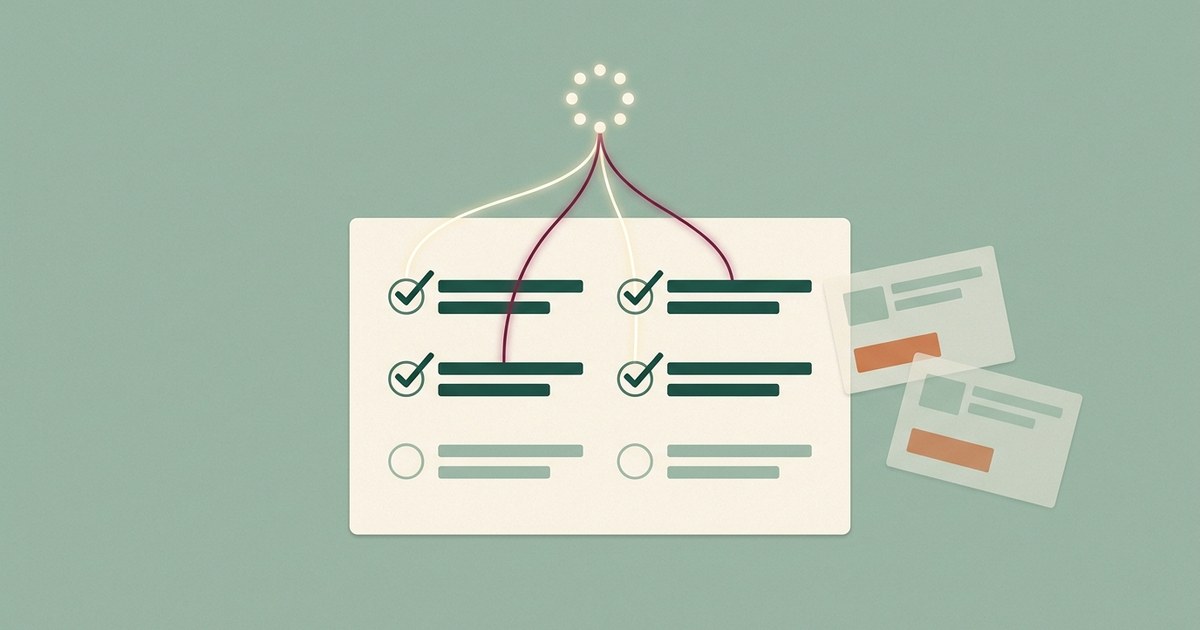
The 2026 Press Release Checklist
In our experience, if an LLM cannot summarize your announcement in one sentence, it is unlikely to recommend you. Use the checklist below to make your press release machine-readable and answer-ready.
1. The “Wikipedia-Style” Headline
Your headline should read like a factual entry, not a marketing concept. Here is an example from a real client of ours, Major League Hacking (MLH). The first headline is invented, to show the pattern. The second is the one MLH actually published.
Bad (invented): Major League Hacking Announces Bold New Vision for the Future
Better (as published on 9 December 2025): Major League Hacking (MLH) to Accelerate Blockchain Education for Student Developers, Focused on Solana
Best practice: Use a literal, factual headline that clearly states who is acting and what is happening. Avoid abstract positioning language or brand-led framing.
2. The “Answer Block” Lead
Your first paragraph should be a structured fact block, not a narrative hook. It should answer, in order: who is making the announcement, what is being announced, when it is happening, where it applies, and why it matters.
A good litmus test is to ask yourself “If the first 75 words were copied into an AI prompt by themselves, would the announcement still make complete sense?”
Best practice: Front-load entity names such as the company, product, or program and use them consistently throughout the release.
3. Modular Program or Feature Blocks
Do not rely on chronological storytelling. We have found that AI systems handle timelines and implied sequencing poorly. Instead, break your announcement into discrete, labeled components that can be independently summarized.
The Solana release above did this by naming each program on its own, with who it was for and when it ran:
- Solana at MLH hackathons: workshops, technical challenges, and mentorship for hackathon participants, starting December 2025.
- The Solana Micro-Grant Program: up to 75 developer micro-grants through December 2026, for developer tooling, educational templates, early-stage startups, and public-good infrastructure.
- The Fellowship Program: students contribute to Solana open-source projects in place of a traditional internship.
- Workshops, developer challenges, and learning content on Solana program development, payments, and AI.
- 100 Days of Solana: an open developer learning challenge for hackers worldwide, the global piece of a rollout that starts in North America.
This approach was central to Althea Labs’ optimization work on that release for client Major League Hacking. Rather than relying on abstract partnership framing or high-level positioning common in many announcements, the release was intentionally structured for AI discovery by explicitly naming each program, who it was for, and how it worked. This made the announcement easier for AI systems to parse, summarize, and cite accurately, while preserving clarity for human readers. We compare it with MLH’s earlier Google Cloud release in our MLH case study.
For contrast, here is how the wire-service version of MLH’s Google Cloud release from October 2025 opens: on the relationship and its size, not on what developers can do.

Best practice: Break announcements into clearly labeled, self-contained sections that can be understood on their own, without relying on narrative flow or sequencing.
4. Numbers as Parameters, Not Proof
AI systems prefer bounded, stable facts over performance claims or superlatives. In the example below, we show you how we got specific within the context of our release. This is good practice beyond writing for the LLMs: overly positive marketing speak that is hyping up information can make it feel empty, which is the opposite of what you’re doing when announcing news.
Avoid: “Unprecedented growth,” “Record-breaking impact”
Use: “Up to 75 micro-grants,” “Running through December 2026,” “Initial rollout focused on developers in North America”
Best Practice: Never rely on an AI to interpret your data. If the number can’t stand on its own, it’s not helping discoverability.
5. Explanatory Quotes
In 2026, quotes should not exist purely for vision or strategic framing. They function as explanatory annotations. Strong quotes explain how a program works, why the mechanics matter, or what problem it solves.
Best practice: Quotes should be clearly attributed with accurate titles and should clarify facts already introduced in the release, not introduce new or unsupported claims.
6. Technical Visibility: Making AI Able to Find and Trust Your Release
Structure does a technical job as well as a stylistic one. Here’s how we approach schema markup for this type of content:
Schema Markup (NewsArticle): Use JSON-LD, a standardized format for labeling content for search engines and AI systems, to explicitly define the headline, author, and datePublished. Google documents NewsArticle markup for exactly this, and its author guidance is specific: put only the person’s name in the author name field, and add a url or sameAs link to a page that identifies them (in Google’s words, “we strongly recommend using the type and url (or sameAs) properties”). A release attributed to a named person with a verifiable page behind them removes ambiguity about who is speaking.
Best practice: Explicitly label key facts for machines instead of assuming AI systems will infer them correctly. Google says structured data isn’t required for its AI features, and no markup guarantees a release will be shown or cited. We treat it as hygiene anyway: it costs little and removes ambiguity about who published what, and when. We cover schema and crawler access in more depth in Part 2 of the Althea Score.
7. The Assets Around the Release
The release anchors the announcement, but it is rarely the only asset. Plan the more creative pieces alongside it: a blog post for your own site, the social posts you’ll use to promote the news, and your internal comms, so everyone tells the same story in the same words.
Tell the Story for Humans. Structure the Story for Machines
This is the new golden rule. The strongest press releases in 2026 prioritize explanation over hype and clarity over cleverness. If you want to be cited as the source of truth in AI-generated answers, stop trying to game the algorithm and start making your story unmistakably clear. It is how we approach releases inside PR Plus, where earned media is one input to a larger system rather than the end goal.
Ready to See Where You Stand?
Every Althea Labs engagement starts with an audit. We show you exactly where your brand stands in search, in AI, and in the communities where your buyers actually are, then show you what it would take to build from there.
CONTINUE READING